
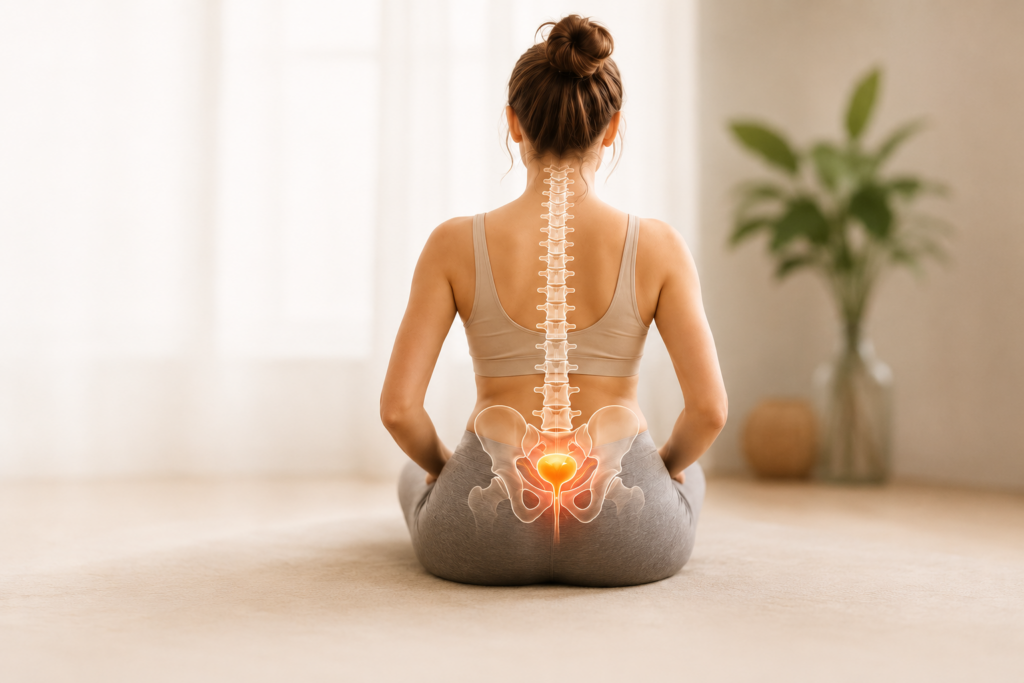
The Hidden Connection Between Pelvic Floor Imbalances, Urinary Retention, and Chronic Biofilms
For many women living with chronic bladder symptoms, the experience becomes painfully predictable.
You feel pressure. Burning. Urgency. Frequency. Maybe pelvic heaviness or low back discomfort. Maybe you constantly feel like you have to urinate, only to sit there frustrated because very little comes out. Or maybe you finish urinating and still feel like your bladder never fully emptied.
Then comes the cycle most women know all too well:
another urine test, another round of antibiotics, another temporary improvement — or sometimes no improvement at all.
And eventually, many women begin hearing the same phrases:
“Your culture looks normal.”
“Maybe it’s just interstitial cystitis.”
“Everything appears fine.”
But deep down, it doesn’t feel fine.
Because symptoms are still there.
And for many women, one major piece of the puzzle is never fully evaluated:
the pelvic floor.
The truth is, the bladder does not function independently. It relies heavily on coordination between muscles, nerves, connective tissue, posture, breathing mechanics, and the surrounding pelvic structures. When those systems become imbalanced — whether from pregnancy, childbirth, C-sections, chronic stress, low back dysfunction, or years of compensation patterns — bladder symptoms can begin to appear in ways that are often misunderstood.
What makes this even more complicated is that pelvic floor dysfunction rarely exists in isolation.
Over time, muscular dysfunction can contribute to incomplete bladder emptying and urinary retention patterns. And when urine remains stagnant in the bladder longer than it should, the bladder environment itself can begin to change. In some women, this may create conditions where irritation persists, bacteria become more difficult to fully eradicate, and chronic symptom cycles develop.
This is where many women get stuck.
They may be told:
- it’s only muscular
- it’s only hormonal
- it’s only anxiety
- or it’s only infection
when in reality, chronic bladder symptoms are often far more layered than that.
For some women, the pelvic floor is a major contributor.
For others, persistent bacterial irritation or biofilm-associated patterns may also still need to be addressed.
And in many cases, both are occurring simultaneously.
That’s why a more comprehensive approach matters.
Because you cannot fully separate the bladder from the body surrounding it.
The Pelvic Floor Is About More Than “Weak Muscles”
When most people hear the phrase pelvic floor dysfunction, they immediately think of weakness. They picture leakage after childbirth or being told to “just do Kegels.”
But that is only one side of the conversation.
In women with chronic bladder symptoms, the pelvic floor is often not weak at all. In fact, many pelvic floor muscles are excessively tight, guarded, shortened, or poorly coordinated.
Imagine trying to relax your shoulders while stressed. Even if you consciously try, your muscles may still remain tense without you realizing it. The pelvic floor can behave the exact same way.
These muscles sit like a sling at the base of the pelvis, supporting the bladder, reproductive organs, and bowel. But they also play a critical role in urination itself. In order to urinate normally, the bladder must contract while the pelvic floor simultaneously relaxes.
If the pelvic floor remains tight or guarded, that coordination can become disrupted.
The result may look like:
- urinary hesitancy
- stop-and-start urine flow
- incomplete emptying
- urgency
- frequency
- pelvic pressure
- bladder pain
- burning without infection
- recurrent “UTI-like” symptoms
And because these symptoms overlap heavily with interstitial cystitis and recurrent UTIs, pelvic floor dysfunction is frequently overlooked.
Many women spend years focused only on the bladder itself while nobody evaluates the muscles, fascia, nerves, or biomechanics surrounding it.
How Pregnancy and Birth Can Quietly Change Pelvic Mechanics
One of the most common starting points for pelvic floor dysfunction is pregnancy and childbirth.
During pregnancy, the body undergoes enormous structural adaptation. Hormones increase ligament laxity to prepare the pelvis for delivery. The center of gravity shifts forward. Abdominal pressure changes. The diaphragm and pelvic floor begin working differently under increased load.
For months, the pelvis exists under sustained stress and compensation.
Then comes delivery.
Whether birth occurs vaginally or via C-section, the pelvic region experiences tremendous change.
With vaginal birth, the pelvic floor muscles and surrounding connective tissue stretch significantly. The sacrum and tailbone absorb force. Nerves may become irritated or compressed. Muscles can develop protective guarding patterns afterward — especially if healing is incomplete or trauma occurred during delivery.
But even women who deliver by C-section are not exempt from pelvic floor dysfunction.
This is one of the biggest misconceptions in women’s health.
A C-section is still major abdominal and pelvic surgery. Scar tissue forms. Fascial restrictions develop. Breathing mechanics often change. Core stability can become altered. Many women unknowingly compensate by gripping through the hips, low back, or pelvic floor for years afterward.
Over time, these compensation patterns can affect bladder function more than people realize.
And importantly, symptoms do not always appear immediately.
Some women feel relatively normal for years before eventually developing:
- urinary urgency
- chronic pelvic tension
- low back pain
- retention
- bladder pressure
- painful intercourse
- recurrent infections
- or IC-like symptoms
By the time symptoms appear, the body may already be deeply entrenched in dysfunctional movement and muscular patterns.
The Overlooked Connection Between the Sacrum, Low Back, and Bladder
Another piece often ignored in chronic bladder symptoms is the relationship between the pelvis, sacrum, and nervous system.
The sacrum sits at the base of the spine and acts as a foundational structure for the pelvis. It also houses important nerve pathways involved in bladder and pelvic floor function.
When the low back, sacroiliac joints, hips, or surrounding musculature become imbalanced, the pelvic floor often compensates.
This can create chronic tension loops.
For example:
- weak glutes may increase pelvic floor gripping
- poor posture may increase abdominal pressure
- prolonged sitting can compress pelvic structures
- low back instability may trigger muscular guarding
- chronic stress may keep the nervous system in a constant “protective” state
Over time, the body adapts to dysfunction so gradually that many women no longer recognize what normal relaxation even feels like.
And because nerves supplying the bladder and pelvic floor originate through the sacral region, irritation within these systems can sometimes create symptoms that closely resemble infection:
- burning
- urgency
- pelvic pressure
- bladder discomfort
- urethral irritation
This does not mean symptoms are “all in your head.”
It means the musculoskeletal and nervous systems can profoundly influence bladder sensation and function.
When Retention Begins to Change the Bladder Environment
This is where the conversation becomes even more important.
If pelvic floor dysfunction contributes to incomplete emptying over long periods of time, the bladder environment itself may begin to change.
Urine is meant to move.
When the bladder does not empty efficiently, stagnant urine can remain behind after voiding. In some women, this may contribute to ongoing irritation and create conditions where bacteria are more difficult to fully clear.
Over time, recurring symptom cycles can develop:
- temporary improvement
- symptom recurrence
- repeated antibiotic exposure
- persistent inflammation
- chronic irritation
- ongoing urgency or burning
And eventually, some women may begin dealing with biofilm-associated patterns.
Biofilms are protective communities that bacteria can form to help shield themselves from the immune system and treatment efforts. Rather than existing as isolated free-floating bacteria, microbes can organize into structured communities that become more persistent over time.
This is one reason some women feel trapped in recurring bladder cycles despite repeated treatment.
And importantly, even if the original trigger involved pelvic floor dysfunction or retention, addressing the muscular component alone may not always fully resolve symptoms once chronic bladder irritation and microbial persistence have developed.
This is where a more comprehensive and individualized approach becomes essential.
Why Both Structural and Bladder-Focused Treatment May Matter
Pelvic floor physical therapy can be incredibly valuable for restoring coordination, reducing muscular guarding, improving bladder emptying mechanics, and addressing pelvic dysfunction.
But for some women — particularly those with longstanding symptoms, chronic retention patterns, or recurrent infections — additional bladder-focused evaluation may also be necessary.
Because by the time dysfunction has existed for years, there may be multiple layers contributing simultaneously:
- muscular dysfunction
- nervous system sensitization
- chronic inflammation
- bladder irritation
- retention
- microbial imbalance
- persistent bacterial communities or biofilms
This is why proper testing matters.
Not every woman with bladder symptoms has biofilms.
Not every woman with pelvic floor dysfunction has infection.
And not every woman with chronic UTIs has a purely structural problem.
The key is understanding which factors are contributing for that specific individual.
A collaborative approach often works best:
- pelvic floor therapy
- functional assessment
- targeted testing
- bladder-focused treatment strategies
- nervous system regulation
- improving emptying mechanics
- reducing chronic irritation
- addressing microbial burden when appropriate
Because lasting improvement often requires looking at the entire system — not just one isolated symptom.
You Deserve a More Complete Conversation
One of the hardest parts of chronic bladder symptoms is how isolating they can feel.
Many women begin doubting themselves.
They become afraid to travel.
Afraid to exercise.
Afraid to have intimacy.
Afraid to leave the house without knowing where the bathroom is.
And after years of conflicting answers, many women stop believing healing is possible.
But chronic bladder symptoms are rarely simple.
And that also means there may be more avenues for healing than you’ve been led to believe.
Sometimes the pelvic floor is the missing piece.
Sometimes the bladder environment still needs deeper evaluation.
And often, the answer lies in addressing both together.
The goal is not simply suppressing symptoms temporarily.
The goal is understanding why the body became stuck in the first place.
And for many women, that starts by finally recognizing that the bladder, pelvic floor, nervous system, and musculoskeletal system are all connected.
Chapter 1: Understanding the Pelvic Floor and Its Relationship to the Bladder
When most women think about bladder symptoms, they naturally focus on the bladder itself.
That makes sense. After all, the symptoms feel like they’re coming from the bladder:
- urgency
- frequency
- burning
- pelvic pressure
- incomplete emptying
- recurrent UTIs
- bladder pain
But what many women are never told is that the bladder functions as part of an entire system. It does not work independently. The muscles, nerves, connective tissue, posture, breathing mechanics, and surrounding pelvic structures all influence how well the bladder is able to store and release urine.
And one of the most important players in that system is the pelvic floor.
For women struggling with chronic bladder symptoms, understanding the pelvic floor can completely change the way they view their body — and often explains why symptoms persist despite repeated treatment attempts.
What the Pelvic Floor Actually Does
The pelvic floor is a group of muscles, ligaments, and connective tissue that sits like a hammock at the bottom of the pelvis.
These muscles support:
- the bladder
- uterus
- bowel
- pelvic organs
But support is only part of their job.
The pelvic floor also helps coordinate:
- urination
- bowel movements
- core stability
- breathing pressure
- sexual function
- pelvic and spinal stability
In other words, these muscles are constantly communicating with the rest of the body.
A healthy pelvic floor needs to be able to do two things well:
- contract when necessary
- relax when necessary
That second part is where many women with chronic bladder symptoms run into trouble.
Because a pelvic floor that cannot properly relax can create just as many problems — and sometimes more — than a weak pelvic floor.
Tight Muscles vs Weak Muscles
For years, pelvic floor conversations centered almost entirely around weakness.
Women were often told:
“Just do Kegels.”
But pelvic floor dysfunction is not always a weakness issue.
In fact, many women with chronic bladder symptoms have pelvic floor muscles that are overactive, tense, guarded, shortened, or poorly coordinated.
Think about how your jaw tightens during stress.
Or how your shoulders creep upward when you’re anxious.
The pelvic floor behaves similarly.
These muscles often respond to:
- stress
- trauma
- pain
- inflammation
- instability
- injury
- poor posture
- childbirth
- surgery
- chronic guarding patterns
by tightening protectively.
The problem is that a constantly tightened pelvic floor can interfere with normal bladder mechanics.
And many women don’t even realize they’re holding tension there.
How Urination Is Supposed to Work
Urination sounds simple, but it actually requires extremely precise coordination.
Normally:
- the bladder contracts
- the pelvic floor relaxes
- urine flows smoothly
- the bladder empties completely
But if the pelvic floor stays tense or guarded, the muscles may not fully release during urination.
That can create:
- hesitancy
- weak stream
- stop-and-start flow
- straining
- incomplete emptying
- the sensation of needing to urinate again shortly afterward
Some women describe it as:
“I never feel empty.”
Others feel constant pressure or urgency because retained urine continues irritating the bladder after voiding.
And over time, these dysfunctional patterns can become chronic.
Why Retention Is So Commonly Overlooked
Many women assume urinary retention means you completely cannot urinate.
But retention often exists on a spectrum.
Some women empty only partially without realizing it for years.
Others experience:
- frequent urination in small amounts
- needing to push to urinate
- lingering bladder pressure
- waking multiple times at night
- double voiding
- recurring UTI-like symptoms
Because symptoms develop gradually, women often normalize them.
And unfortunately, standard medical evaluations do not always assess pelvic floor coordination thoroughly unless someone specifically looks for it.
As a result, women may continue receiving:
- antibiotics
- bladder medications
- IC diagnoses
- dietary recommendations
without anyone evaluating the muscular mechanics influencing bladder emptying itself.
The Nervous System’s Role in Pelvic Floor Dysfunction
The pelvic floor is deeply connected to the nervous system.
This is one reason chronic bladder symptoms can become so complex.
When the body perceives stress — physical or emotional — muscles naturally tighten as a protective mechanism.
For some women, this protective pattern becomes chronic.
The nervous system essentially learns to stay in a heightened state of guarding.
This can happen after:
- traumatic births
- painful infections
- chronic inflammation
- surgery
- injury
- ongoing stress
- sexual trauma
- chronic pain conditions
Over time, the body may begin anticipating pain or urgency before it even occurs.
This creates a cycle:
- symptoms trigger guarding
- guarding worsens muscle tension
- tension worsens bladder mechanics
- worsening symptoms reinforce guarding
And eventually, the nervous system becomes hypersensitive.
This does not mean symptoms are psychological.
It means the brain, nerves, muscles, and bladder are constantly communicating with one another.
Why Pelvic Floor Dysfunction Mimics UTIs and IC
One of the biggest challenges in pelvic floor dysfunction is that symptoms overlap heavily with other bladder conditions.
Women with pelvic floor dysfunction may experience:
- burning
- urgency
- frequency
- pelvic pain
- bladder pressure
- urethral discomfort
- painful intercourse
- incomplete emptying
which sounds nearly identical to:
- recurrent UTIs
- interstitial cystitis
- overactive bladder
- chronic bladder inflammation
This overlap is why many women cycle through multiple diagnoses for years.
And importantly, more than one issue can exist simultaneously.
Some women truly have:
- pelvic floor dysfunction
- retention
- chronic inflammation
- and persistent bacterial involvement
all occurring together.
This is where the conversation becomes much more nuanced than simply:
“It’s either muscular or infectious.”
Because for many women, both systems influence each other.
How the Pelvic Floor Can Influence the Bladder Environment
This is where chronic dysfunction may begin affecting the bladder more directly.
When urination mechanics become impaired over time, incomplete emptying can contribute to urine stagnation.
And stagnant urine may create ongoing irritation within the bladder environment.
For some women, this may increase susceptibility to recurring infections or make symptoms more difficult to fully resolve.
Over time, repeated inflammation and bacterial persistence may contribute to more chronic symptom patterns.
This is especially important in women who:
- repeatedly relapse after antibiotics
- have chronic urgency despite treatment
- improve temporarily then regress
- experience recurrent “embedded” symptoms
- struggle with retention patterns
- feel like something is continually being missed
Because by this stage, addressing muscle tension alone may not always fully resolve the problem.
The original dysfunction may have started mechanically — but eventually the bladder environment itself may also require attention.
Why Proper Testing and Individualized Care Matter
One of the most important things women need to hear is this:
not every chronic bladder symptom has the same root cause.
Some women primarily need:
- pelvic floor rehabilitation
- breathing retraining
- nervous system regulation
- mobility work
- postpartum recovery support
Others may also need:
- advanced bladder evaluation
- microbial testing
- biofilm-focused treatment strategies
- inflammation reduction
- retention-focused interventions
The key is identifying which layers are contributing.
Because treating chronic bladder symptoms successfully often requires looking at:
- structure
- function
- mechanics
- inflammation
- and the bladder environment itself
rather than assuming there is only one explanation.
The Goal Is Better Function — Not Just Temporary Symptom Relief
Many women with chronic bladder symptoms become trapped in cycles of short-term symptom management.
But true healing often requires understanding why the body became dysfunctional in the first place.
That means asking bigger questions:
- Are the pelvic floor muscles coordinating properly?
- Is the bladder emptying fully?
- Is the nervous system stuck in chronic guarding mode?
- Is low back or sacral dysfunction contributing?
- Has longstanding retention changed the bladder environment?
- Is persistent microbial involvement still present?
These are the conversations many women never receive.
And yet they can completely change the direction of treatment.
Because the bladder is not isolated from the rest of the body.
And for many women, healing begins when someone finally looks at the full picture instead of just one symptom at a time.
Chapter 2: How Pregnancy, Birth, and C-Sections Can Shift Pelvic Mechanics
For many women, chronic bladder symptoms do not appear out of nowhere.
When you start tracing the timeline backward, there is often a story the body has been telling for years:
- pregnancy
- difficult deliveries
- C-sections
- chronic low back pain
- hip instability
- tailbone injuries
- postpartum core weakness
- unresolved pelvic tension
The problem is that many women never connect these experiences to bladder symptoms because the symptoms may not appear immediately.
A woman may give birth in her 20s and not begin struggling with urgency, retention, pelvic pressure, or recurrent UTIs until her late 30s or 40s. By then, the connection feels distant. The bladder symptoms seem random.
But the body keeps score of compensation patterns long after healing is considered “complete.”
And one of the biggest missing conversations in women’s health is how pregnancy and postpartum recovery can quietly alter pelvic mechanics in ways that affect bladder function years later.
Pregnancy Changes More Than Just the Abdomen
During pregnancy, the body undergoes massive structural adaptation.
Hormones such as relaxin increase ligament laxity to prepare the pelvis for childbirth. The abdominal wall stretches. The diaphragm shifts upward. The center of gravity changes. Weight distribution moves forward. The low back often compensates with increased arching and muscular tension.
At the same time, the pelvic floor begins carrying significantly more pressure.
For months, these muscles support:
- the growing uterus
- increased abdominal load
- changing posture
- altered breathing mechanics
- pressure from below and above
This alone can begin changing how the pelvic floor functions.
Some muscles become overstretched.
Others become chronically tight trying to stabilize the pelvis.
And because the pelvic floor works closely with the deep core and diaphragm, dysfunction in one area often creates compensation throughout the entire system.
The Pelvis Is Designed to Adapt — But Sometimes It Never Fully Resets
One of the most overlooked realities of postpartum recovery is that the body does not always naturally return to optimal mechanics after delivery.
Many women are cleared medically after six weeks and told everything looks fine.
But structurally and functionally, the body may still be compensating months or even years later.
For example:
- weakened glutes may force the pelvic floor to overwork
- abdominal weakness may increase downward pressure
- scar tissue may alter movement patterns
- breathing mechanics may remain dysfunctional
- pelvic asymmetry may persist
- nervous system guarding may become chronic
The body adapts remarkably well.
But adaptation is not always the same thing as healing.
And eventually, those compensation patterns may begin showing up as bladder symptoms.
Vaginal Birth and Pelvic Floor Trauma
Vaginal delivery places enormous strain on the pelvic floor muscles, connective tissue, and nerves.
During birth:
- muscles stretch significantly
- nerves may become compressed
- connective tissue experiences tension
- the tailbone and sacrum absorb force
- pelvic alignment can shift
For some women, recovery is relatively straightforward.
For others, the body remains stuck in protective patterns afterward.
This can look like:
- chronic muscle tension
- pelvic floor guarding
- tailbone pain
- painful intercourse
- urinary urgency
- retention
- difficulty relaxing during urination
- pelvic heaviness
What’s important to understand is that pelvic floor dysfunction is not always about damage alone.
Sometimes the issue is how the body compensates after the experience.
A muscle that never fully relaxes can become just as problematic as one that lacks strength.
Why Symptoms May Not Show Up Right Away
This is one of the reasons women often miss the connection between childbirth and bladder dysfunction.
The body compensates quietly for years.
At first, maybe symptoms are subtle:
- occasional urgency
- mild low back pain
- pressure during exercise
- needing to urinate “just in case”
- slight hesitancy
Then life adds more stressors:
- additional pregnancies
- prolonged sitting
- aging
- hormonal changes
- stress
- inflammation
- poor sleep
- chronic tension
- exercise strain
Eventually the body reaches a threshold where compensation is no longer sustainable.
And suddenly symptoms become harder to ignore.
Many women then enter the healthcare system focused solely on the bladder without realizing the musculoskeletal foundation may have been shifting for years underneath the surface.
The C-Section Misconception
One of the biggest myths in pelvic health is:
“I had a C-section, so my pelvic floor should be fine.”
But C-sections absolutely can influence pelvic floor dysfunction and bladder symptoms.
A C-section is major abdominal surgery involving:
- incisions through multiple tissue layers
- fascial disruption
- scar formation
- nervous system activation
- altered core function
And even before the surgery occurs, the body has already spent months adapting to pregnancy itself.
After surgery, many women unconsciously develop compensation patterns to protect the incision area.
This may include:
- shallow breathing
- abdominal gripping
- hip tension
- altered posture
- reduced core engagement
- pelvic floor overcompensation
Scar tissue can also create restrictions that affect mobility and pressure distribution throughout the pelvis and abdomen.
Over time, these patterns may influence:
- bladder positioning
- pelvic tension
- emptying mechanics
- pressure regulation
- low back stability
Again, symptoms may not appear immediately.
But years later, women may begin experiencing:
- urgency
- frequency
- pelvic tightness
- painful bladder symptoms
- retention
- recurrent infections
- or IC-like symptoms
without ever realizing the relationship to prior pelvic and abdominal compensation.
The Connection Between Breathing, Core Stability, and the Pelvic Floor
One area rarely discussed in conventional bladder care is breathing mechanics.
The diaphragm and pelvic floor function as a pressure system together.
When you inhale, the diaphragm descends and the pelvic floor naturally lengthens slightly.
When you exhale, the system recoils upward.
This coordination matters.
But pregnancy, stress, surgery, chronic pain, and poor posture can disrupt this rhythm.
Many women with chronic pelvic tension breathe shallowly into the chest rather than fully into the rib cage and abdomen.
As a result:
- abdominal pressure becomes poorly managed
- the pelvic floor remains braced
- muscles stop coordinating efficiently
- the nervous system stays activated
Over time, this constant low-grade tension can contribute to pelvic dysfunction and altered bladder mechanics.
This is why pelvic floor therapy often includes:
- breathing retraining
- pressure management
- posture correction
- movement coordination
rather than only strengthening exercises.
Why Kegels Are Not Always the Solution
This surprises many women.
They assume bladder symptoms automatically mean the pelvic floor is weak.
But if muscles are already excessively tight or poorly coordinated, repeatedly contracting them through Kegels may actually worsen symptoms.
For women with hypertonic pelvic floor dysfunction, additional tightening can sometimes increase:
- urgency
- burning
- retention
- pelvic pain
- bladder pressure
This is why individualized assessment matters so much.
The goal is not simply strengthening.
The goal is restoring proper coordination and function.
Sometimes that means strengthening.
Sometimes it means relaxation.
Often it means both.
How Chronic Pelvic Compensation Can Affect the Bladder Over Time
As pelvic dysfunction becomes chronic, the bladder itself may begin responding to the altered environment.
Muscular tension may contribute to:
- incomplete emptying
- urinary retention
- chronic irritation
- pelvic congestion
- inflammation
And over time, recurrent stagnation may create conditions where symptoms become increasingly persistent.
This is where many women begin entering cycles of:
- repeated antibiotics
- temporary relief
- recurring urgency
- persistent burning
- chronic inflammation
- unresolved symptoms
For some women, longstanding retention and bladder dysfunction may also contribute to more complex microbial patterns, including biofilm-associated persistence.
This is an important distinction because once chronic bladder irritation and microbial imbalance become established, pelvic floor therapy alone may not fully resolve symptoms.
The structural dysfunction still matters.
But the bladder environment itself may now require attention as well.
Why Collaborative Care Often Works Best
This is where a more integrative approach becomes incredibly valuable.
Pelvic floor therapy can help address:
- muscle coordination
- pelvic tension
- posture
- breathing mechanics
- sacral mobility
- bladder emptying patterns
But women with longstanding symptoms may also benefit from:
- advanced testing
- bladder-focused evaluation
- retention assessment
- inflammation support
- microbial investigation
- biofilm-focused treatment strategies when appropriate
Because chronic bladder symptoms are often layered.
And women deserve care that reflects that complexity instead of oversimplifying it.
Your Symptoms Are Not “Just in Your Head”
One of the most damaging experiences many women face is being dismissed.
When cultures are inconsistent or imaging appears normal, women are sometimes told:
- it’s anxiety
- it’s stress
- it’s normal after childbirth
- it’s “just IC”
- or they simply need to relax
But pelvic floor dysfunction, retention, and chronic bladder irritation are very real physiological processes.
And understanding how pregnancy, birth, surgery, and pelvic mechanics influence bladder health can finally help women connect dots that may have been missed for years.
Because the body is interconnected.
And often, chronic bladder symptoms are the result of multiple systems struggling together — not a single isolated problem.
Chapter 3: The Low Back, Sacrum, and Bladder Connection
When women think about bladder symptoms, they rarely think about their low back.
They think about:
- the bladder
- the urethra
- infection
- hormones
- pelvic organs
But one of the most overlooked contributors to chronic bladder dysfunction is the relationship between the pelvis, sacrum, spine, and nervous system.
This is where things become more interconnected than many women realize.
Because the bladder does not simply “sit” inside the pelvis independently. It exists within a complex structural and neurological system that relies heavily on balance, mobility, muscle coordination, and nerve communication.
When that system becomes dysfunctional, bladder symptoms can follow.
And for many women with chronic urgency, retention, pelvic pain, or recurrent UTI-like symptoms, the low back and sacral region may be a much bigger piece of the puzzle than they’ve ever been told.
The Sacrum: The Foundation of the Pelvis
The sacrum is the triangular bone at the base of the spine that sits between the two pelvic bones.
It acts as:
- a structural anchor
- a force distributor
- a connection point between the spine and pelvis
- a protective housing for important nerves
The sacrum also plays a major role in pelvic stability and movement.
Every time you:
- walk
- sit
- bend
- lift
- breathe
- rotate
- or stabilize your core
the sacrum helps coordinate those movements.
And importantly, nerves involved in bladder and pelvic floor function emerge from this region.
This means dysfunction involving the sacrum can influence:
- pelvic floor muscle tension
- bladder signaling
- urinary coordination
- pelvic pain
- urethral sensations
- urgency patterns
When the sacrum becomes restricted, unstable, rotated, or surrounded by chronic muscular tension, the body often compensates in ways that affect the bladder indirectly.
Why Low Back Dysfunction Can Affect the Pelvic Floor
The body functions as a chain.
When one area loses stability or mobility, another area often compensates.
This is especially true in the pelvis.
For example:
- weak glutes may force pelvic floor muscles to overwork
- lumbar instability may increase pelvic guarding
- hip tightness may alter pelvic alignment
- poor posture may increase abdominal pressure
- chronic back pain may change movement patterns
Over time, these compensations can create a constant state of muscular overactivity around the pelvis.
And because the pelvic floor works closely with the core, hips, diaphragm, and low back, dysfunction rarely stays isolated to one structure.
This is why many women with bladder symptoms also report:
- low back pain
- SI joint discomfort
- tailbone pain
- hip tightness
- abdominal tension
- pelvic pressure
The symptoms are often connected — even if they initially seem unrelated.
SI Joint Dysfunction and Pelvic Compensation
The sacroiliac joints, or SI joints, connect the sacrum to the pelvic bones.
These joints are designed for stability but still allow subtle movement during walking, bending, and load transfer.
Pregnancy, childbirth, injury, hypermobility, or chronic compensation can sometimes disrupt this balance.
When the SI joints become irritated or unstable, surrounding muscles often tighten protectively.
That compensation may involve:
- the pelvic floor
- hip rotators
- low back muscles
- abdominal muscles
- glutes
The body essentially creates “bracing patterns” to maintain stability.
But constant bracing comes at a cost.
Over time, excessive muscular tension can interfere with:
- bladder relaxation
- pelvic floor coordination
- pressure regulation
- nerve mobility
- bladder emptying
This is one reason some women notice their bladder symptoms flare:
- during low back pain episodes
- after prolonged sitting
- during stress
- around exercise
- after lifting
- during periods of inflammation
The musculoskeletal system and bladder are often influencing one another continuously.
The Nervous System Connection
This is where the conversation becomes especially important.
The bladder relies on precise nerve communication to function properly.
The nervous system coordinates:
- bladder filling
- urgency sensations
- muscle relaxation
- bladder contraction
- pelvic floor coordination
Many of these nerve pathways involve the sacral region.
When surrounding tissues become tight, inflamed, irritated, or compressed, abnormal sensations can develop.
Women may experience:
- burning
- urgency
- pressure
- urethral irritation
- pelvic pain
- bladder discomfort
even without a classic acute infection.
This does not mean symptoms are imagined.
It means nerves can become sensitized.
And once the nervous system becomes chronically irritated, symptoms can persist long after the original trigger began.
Why Chronic Stress Makes Pelvic Symptoms Worse
Many women notice their bladder symptoms worsen during periods of stress.
That is not a coincidence.
The nervous system and pelvic floor are deeply connected.
When the body perceives stress, it naturally shifts into a protective state:
- muscles tighten
- breathing becomes shallow
- posture changes
- the nervous system becomes more reactive
For some women, this creates chronic pelvic guarding patterns.
The body essentially stays “on.”
This can amplify:
- urgency
- frequency
- pain
- bladder sensitivity
- pelvic floor tension
- incomplete emptying
Over time, the nervous system may begin reacting more intensely to smaller triggers.
This process is sometimes called sensitization.
And once sensitization develops, symptoms can become increasingly disproportionate to the original trigger.
This is one reason chronic bladder conditions are often so emotionally and physically exhausting.
The body never fully feels safe enough to relax.
The Sitting Problem Nobody Talks About
Modern lifestyle patterns also contribute significantly to pelvic dysfunction.
Many women spend:
- hours sitting at desks
- driving
- commuting
- leaning forward
- bracing their abdomen
- breathing shallowly
Prolonged sitting increases pressure through the pelvic floor and limits normal movement variability.
Over time this can contribute to:
- pelvic congestion
- muscle shortening
- hip tightness
- decreased glute activation
- sacral stiffness
- altered bladder pressure dynamics
For women already predisposed to pelvic dysfunction after pregnancy, surgery, or chronic stress, these patterns can further reinforce dysfunction.
The body slowly adapts to tension until tension begins feeling normal.
Why Some Women Feel Better Temporarily With Antibiotics
This is an important and nuanced conversation.
Some women with pelvic floor dysfunction improve temporarily with antibiotics even when mechanics are still contributing.
Why?
Because inflammation and muscular tension often influence each other.
If antibiotics temporarily reduce bacterial burden or inflammation:
- pelvic muscles may guard less
- urgency may decrease
- bladder irritation may calm temporarily
But if retention, poor emptying, muscular dysfunction, or nervous system sensitization remain unresolved, symptoms may eventually return.
This is why many women experience:
- symptom flare
- treatment
- temporary improvement
- recurrence
over and over again.
The underlying contributors may never have been fully addressed.
When Retention Starts Affecting the Bladder Environment
As chronic dysfunction continues, incomplete emptying may begin changing the bladder environment itself.
Urine that remains stagnant in the bladder longer than intended may contribute to:
- ongoing irritation
- inflammatory cycles
- recurrent infections
- bacterial persistence
Over time, some women may develop more chronic microbial patterns, including biofilm-associated persistence.
This is where the conversation expands beyond biomechanics alone.
Because once the bladder environment itself becomes chronically irritated or colonized, addressing only the pelvic floor may not be sufficient.
The original trigger may have been mechanical.
But the bladder may now also require direct support and treatment.
This is often where women feel confused.
They improve partially with pelvic floor therapy but still experience:
- burning
- urgency
- recurrent symptoms
- inflammation
- flares after intercourse
- recurring infections
And that’s because chronic bladder conditions are often multifactorial.
Why Proper Testing Matters
Not every woman with bladder symptoms has:
- biofilms
- chronic infection
- retention
- pelvic floor dysfunction
- nervous system sensitization
But many women have several of these occurring together.
This is why individualized assessment matters so much.
A comprehensive approach may involve:
- pelvic floor evaluation
- bladder emptying assessment
- low back and sacral assessment
- microbial testing
- inflammation evaluation
- nervous system regulation
- movement analysis
because chronic bladder symptoms rarely exist in isolation.
The Goal Is Restoring Balance Across the Entire System
The body functions best when:
- muscles coordinate properly
- nerves communicate clearly
- the bladder empties efficiently
- pressure systems function normally
- inflammation remains controlled
- the nervous system feels safe
When one part of the system becomes dysfunctional, the body compensates.
When compensation continues long enough, symptoms become chronic.
And for many women, lasting improvement comes not from chasing isolated symptoms — but from finally understanding how the pelvis, bladder, nervous system, and musculoskeletal system all work together.
Chapter 4: Urinary Retention, Chronic Irritation, and Biofilms
One of the biggest missing conversations in chronic bladder care is what happens after dysfunction has existed for a long time.
Because pelvic floor dysfunction does not always stay “just muscular.”
Over time, chronic tension, poor bladder emptying, inflammation, and recurrent infections can begin influencing the bladder environment itself. And for many women, this is the point where symptoms become more persistent, confusing, and difficult to fully resolve.
This is also where many women begin feeling stuck between two worlds.
They may be told:
- it’s purely pelvic floor dysfunction
- it’s purely interstitial cystitis
- it’s purely infection
- or everything looks “normal”
Meanwhile, they continue living with:
- urgency
- frequency
- burning
- pressure
- recurrent flares
- pelvic discomfort
- incomplete emptying
- chronic inflammation
The reality is that chronic bladder symptoms are often layered.
And understanding how retention and microbial persistence may interact is incredibly important.
What Is Urinary Retention?
When people hear the word retention, they often imagine a complete inability to urinate.
But in reality, many women experience partial retention without realizing it.
The bladder may empty somewhat — just not completely.
Even small amounts of retained urine over time can matter.
Common signs of retention may include:
- feeling like you still need to urinate afterward
- double voiding
- weak stream
- stop-and-start urination
- needing to push or strain
- frequent urination in small amounts
- nighttime urination
- pelvic pressure
- recurrent UTI-like symptoms
Some women adapt to these symptoms so gradually that they begin assuming this is simply normal aging or postpartum change.
But normal urination should not feel difficult, incomplete, or constantly urgent.
Why Proper Bladder Emptying Matters
The bladder is designed to fill and empty rhythmically.
Urine should not remain stagnant for long periods unnecessarily.
When emptying becomes impaired, several things may happen:
- urine remains in the bladder longer
- irritation may increase
- inflammation may persist
- bacteria may have more opportunity to remain present
- pressure patterns may become abnormal
This does not automatically mean infection is present.
But it does mean the bladder environment may become more vulnerable over time.
For some women, retention contributes primarily to irritation and urgency.
For others, recurrent infections begin developing.
And for some, both processes start feeding into one another.
Why Some Women Stay Stuck in Recurring Symptom Cycles
Many women with chronic bladder symptoms describe a frustrating pattern:
- symptoms flare
- antibiotics help temporarily
- symptoms improve
- symptoms gradually return
At first, this may happen only occasionally.
But over time, flares may become:
- more frequent
- harder to treat
- more inflammatory
- less responsive to standard treatment
This is often where women begin hearing terms like:
- chronic UTI
- embedded infection
- interstitial cystitis
- bladder pain syndrome
- pelvic floor dysfunction
And while each of these conditions may overlap, many women are still never told how retention and chronic bladder irritation may contribute to persistent symptom patterns over time.
Understanding Biofilms in a Simple Way
Biofilms sound intimidating, but the concept itself is actually fairly simple.
Bacteria do not always exist as isolated free-floating organisms.
In some environments, they can organize into protective communities called biofilms.
You can think of biofilms almost like a shield or protective matrix that helps bacteria survive under stress.
Within these communities, bacteria may become:
- harder for the immune system to fully clear
- less responsive to treatment
- more persistent over time
Biofilms are not unique to the bladder.
They exist throughout nature and medicine.
But in chronic bladder conditions, biofilm-associated patterns are increasingly being discussed as one possible contributor to recurring symptoms in some patients.
Especially when women experience:
- repeated symptom recurrence
- chronic inflammation
- persistent urgency
- recurring infections
- ongoing burning despite treatment
- relapse shortly after antibiotics
How Retention May Contribute to Chronic Bladder Dysfunction
This is where the pelvic floor conversation becomes critically important.
If pelvic floor dysfunction contributes to incomplete emptying over long periods, the bladder environment itself may gradually change.
Stagnant urine may:
- increase irritation
- alter the local environment
- contribute to inflammatory cycles
- potentially allow microbial persistence
Over time, chronic dysfunction can become both:
- mechanical
- and microbial
This is why some women improve significantly with pelvic floor therapy but still continue having residual bladder symptoms.
Because while mechanics matter tremendously, longstanding bladder dysfunction may also require direct bladder-focused evaluation and treatment.
Why Pelvic Floor Therapy Alone May Not Always Be Enough
Pelvic floor therapy can be incredibly effective for:
- improving coordination
- reducing guarding
- restoring mobility
- improving emptying mechanics
- decreasing pelvic tension
But by the time many women seek help, symptoms may have existed for years.
At that stage, there may already be:
- chronic inflammation
- altered bladder sensitivity
- persistent irritation
- microbial imbalance
- recurrent infection patterns
- biofilm-associated persistence
This does not mean pelvic floor therapy failed.
It simply means multiple layers may now need to be addressed together.
And this is where many women finally begin understanding why they have only experienced partial improvement from isolated treatment approaches.
Where Proper Testing and Targeted Treatment Become Important
This is where your role becomes incredibly important in the healing process.
Because women with chronic bladder symptoms deserve more than assumptions.
They deserve:
- proper evaluation
- individualized assessment
- targeted testing
- thoughtful interpretation
- and treatment strategies that consider both structure and bladder health
Not every woman with pelvic floor dysfunction has biofilms.
Not every woman with chronic urgency has infection.
And not every woman with recurrent UTIs has purely muscular dysfunction.
The goal is identifying what is actually contributing in that specific person.
For women with persistent symptoms despite pelvic floor treatment, further evaluation may help assess:
- microbial burden
- chronic inflammatory patterns
- recurrent bacterial persistence
- retention-related dysfunction
- biofilm-associated involvement
This creates a much more complete clinical picture.
Why a Collaborative Approach Often Works Best
One of the most effective approaches to chronic bladder symptoms is collaboration.
Because no single therapy addresses every layer of dysfunction.
A woman may benefit from:
- pelvic floor physical therapy
- nervous system regulation
- posture and movement retraining
- bladder-focused treatment
- targeted microbial support
- retention management
- inflammation reduction
- stress regulation
- scar tissue work
- breathing retraining
The body rarely separates these systems.
So treatment often works best when providers stop separating them too.
This is especially important in women who have spent years cycling between:
- antibiotics
- flare-ups
- symptom suppression
- frustration
- dismissal
- and incomplete answers
Why Women Need a More Nuanced Conversation
The problem with many chronic bladder discussions is that women are often pushed into extremes.
They are told:
- it’s definitely infection
or - it’s definitely not infection
- it’s definitely pelvic floor dysfunction
or - it’s definitely IC
But the body is rarely that simple.
For many women, chronic bladder symptoms develop through layers over time:
- pregnancy or pelvic changes
- muscular dysfunction
- retention patterns
- nervous system sensitization
- chronic irritation
- recurrent infections
- microbial persistence
- ongoing inflammation
And by the time symptoms become chronic, multiple systems may need support simultaneously.
The Goal Is Understanding Why Symptoms Persist
Women living with chronic bladder symptoms are often exhausted not just physically — but emotionally.
Many have spent years trying:
- diets
- supplements
- antibiotics
- bladder medications
- physical therapy
- elimination protocols
- lifestyle changes
only to continue relapsing.
That is why understanding the why behind symptom persistence matters so much.
Sometimes the pelvic floor is the missing piece.
Sometimes the bladder environment still needs attention.
And often, both are influencing each other continuously.
The goal is not simply chasing temporary symptom relief.
The goal is restoring function, reducing chronic irritation, improving bladder health, and helping the body finally move out of survival mode.
Because women deserve answers that are more complete than:
“Everything looks normal.”
Chapter 5: How Pelvic Floor Therapy and Targeted Bladder Treatment Can Work Together
By the time many women reach the point of searching for answers, they are exhausted.
They have often spent years bouncing between:
- urologists
- gynecologists
- urgent care visits
- antibiotics
- restrictive diets
- online forums
- supplements
- conflicting opinions
Many feel trapped in a cycle of temporary relief followed by another flare.
And one of the most frustrating parts is that they are often forced to choose between two explanations:
“It’s pelvic floor dysfunction.”
or
“It’s chronic infection.”
But for many women, the truth is more nuanced than that.
The pelvic floor and bladder environment frequently influence each other. Muscular dysfunction may contribute to retention and irritation, while chronic inflammation or microbial persistence may continue sensitizing the bladder long after the original dysfunction began.
This is why collaborative, multi-layered care is often where women begin making the most meaningful progress.
Not because one provider “fixes everything,” but because the body itself is interconnected.
What Pelvic Floor Therapy Actually Does
Pelvic floor therapy is often misunderstood.
Many women assume it only involves Kegels or strengthening exercises, but true pelvic floor rehabilitation is far more comprehensive.
A skilled pelvic floor therapist evaluates:
- muscle coordination
- tension patterns
- breathing mechanics
- posture
- pelvic alignment
- scar tissue restrictions
- movement compensation
- bladder emptying mechanics
- nervous system involvement
For women with chronic bladder symptoms, treatment often focuses less on strengthening and more on restoring normal function and relaxation.
This may involve:
- releasing chronically tight muscles
- improving pelvic mobility
- retraining breathing patterns
- reducing guarding
- improving bladder emptying coordination
- restoring pressure balance throughout the core and pelvis
For many women, this can dramatically improve:
- urgency
- pelvic pressure
- urinary hesitancy
- frequency
- pain with urination
- low back tension
- pelvic discomfort
And importantly, pelvic floor therapy often helps women reconnect with body patterns they didn’t even realize had become dysfunctional.
Why Some Women Only Improve Partially
This is where the conversation becomes especially important.
Some women experience tremendous improvement with pelvic floor therapy alone.
Others improve significantly — but still continue struggling with:
- recurrent flares
- burning
- bladder irritation
- persistent urgency
- recurrent infections
- inflammation
- post-intercourse symptoms
This does not necessarily mean therapy “didn’t work.”
It may simply mean there are additional layers contributing to symptoms.
Because once chronic retention, inflammation, or bacterial persistence has existed long enough, the bladder environment itself may also require direct attention.
And this is where proper testing and individualized treatment become incredibly valuable.
Why Proper Testing Matters
One of the biggest problems in chronic bladder care is assumption-based treatment.
Women are frequently treated without fully understanding:
- whether retention is occurring
- whether pelvic dysfunction is contributing
- whether bacteria are still present
- whether biofilm-associated patterns exist
- whether inflammation is ongoing
- or whether multiple factors are overlapping simultaneously
This is why more comprehensive testing can be so important in women with persistent or recurring symptoms.
Especially when symptoms continue despite:
- standard antibiotics
- negative cultures
- pelvic floor therapy
- IC treatments
- dietary changes
Because not all chronic bladder symptoms stem from the same root cause.
Some women primarily need musculoskeletal rehabilitation.
Others need deeper evaluation of the bladder environment itself.
Many need both.
Addressing the Bladder Environment
This is where targeted bladder-focused care comes in.
If longstanding dysfunction, retention, or chronic irritation has altered the bladder environment, treatment may also need to focus on:
- reducing inflammation
- supporting bladder tissue health
- improving urinary flow patterns
- evaluating microbial involvement
- addressing persistent bacterial burden
- targeting biofilm-associated patterns when appropriate
This approach is especially important for women who:
- repeatedly relapse after antibiotics
- improve temporarily then flare again
- feel chronically inflamed
- have ongoing urgency despite treatment
- experience recurrent UTI symptoms
- have symptoms triggered by intercourse
- continue struggling despite “normal” results
These women are often told:
“Everything looks fine.”
But symptoms are information.
And persistent symptoms deserve a deeper conversation.
Why Biofilms Matter in Chronic Cases
For women with longstanding bladder dysfunction, biofilms may become one piece of the larger puzzle.
Again, this does not mean every woman with bladder symptoms has biofilms.
But in some chronic cases, persistent bacterial communities may contribute to recurring symptom cycles and reduced treatment responsiveness.
This is especially relevant when women experience:
- repeated recurrences
- chronic inflammation
- ongoing irritation
- symptoms that quickly return after treatment
In these situations, addressing the pelvic floor alone may improve mechanics but still leave underlying bladder irritation unresolved.
This is why combining:
- pelvic rehabilitation
- targeted testing
- bladder-focused treatment
- and microbial evaluation
can often produce more meaningful long-term progress.
The Nervous System Still Matters Too
One important thing many women overlook is that the nervous system remains involved throughout all of this.
Chronic symptoms place the body into a prolonged stress response.
Women become hyperaware of:
- bladder sensations
- urgency
- pain
- bathroom access
- symptom flares
Over time, the nervous system may remain stuck in a protective loop.
This can amplify:
- muscle tension
- urgency sensations
- pain perception
- bladder sensitivity
This is why effective treatment often includes:
- nervous system regulation
- stress reduction
- sleep support
- breathing work
- movement therapy
- reducing fear around symptoms
Because healing is not only physical.
The body also needs to feel safe enough to stop guarding constantly.
Why Women Need Individualized Care
One of the most important takeaways from chronic bladder dysfunction is this:
there is no one-size-fits-all answer.
Two women may both have:
- urgency
- frequency
- burning
- pelvic pain
but have completely different underlying contributors.
One woman may primarily have:
- hypertonic pelvic floor dysfunction
- nervous system guarding
- postpartum compensation patterns
Another may have:
- retention
- chronic inflammation
- recurrent bacterial persistence
- biofilm-associated involvement
And many women exist somewhere in between.
This is why individualized assessment matters far more than generic treatment protocols.
Healing Often Requires Multiple Layers
One of the most empowering things women can realize is that chronic bladder symptoms are not always caused by a single isolated issue.
The body is layered.
And healing often becomes more successful when treatment reflects that complexity.
For many women, meaningful progress comes from combining:
- pelvic floor therapy
- movement retraining
- bladder-focused care
- nervous system regulation
- retention management
- inflammation support
- microbial evaluation
- biofilm-targeted strategies when appropriate
rather than chasing only one piece of the puzzle.
You Deserve More Than Symptom Suppression
Too many women spend years simply managing symptoms instead of understanding why symptoms developed in the first place.
They adapt their entire lives around:
- bathrooms
- food restrictions
- fear of flares
- intimacy concerns
- travel anxiety
- chronic discomfort
But women deserve more than survival-mode healthcare.
They deserve:
- comprehensive evaluation
- individualized care
- collaborative treatment
- validation
- and providers willing to look beyond surface-level explanations
Because the bladder is not isolated from the rest of the body.
The pelvic floor matters.
The nervous system matters.
Retention matters.
Inflammation matters.
And in some women, persistent microbial patterns and biofilms matter too.
The goal is not proving one theory right and another wrong.
The goal is understanding the full picture well enough to finally help the body heal.
Conclusion: Looking Beyond the Bladder
For many women, chronic bladder symptoms become more than physical discomfort.
They become emotionally exhausting.
The unpredictability.
The constant urgency.
The fear of flares.
The repeated treatments.
The frustration of being told everything looks normal while symptoms continue disrupting daily life.
Over time, many women begin feeling disconnected from their own bodies.
But one of the most important things to understand is this:
chronic bladder symptoms are often far more interconnected than most women realize.
The bladder does not function independently.
It responds to:
- pelvic floor coordination
- nervous system regulation
- breathing mechanics
- posture
- low back and sacral stability
- inflammation
- urinary retention
- and the overall bladder environment itself
For some women, pelvic floor dysfunction may be a major missing piece.
For others, chronic retention and microbial persistence may also need to be addressed.
And for many, both are occurring simultaneously.
This is why a collaborative and individualized approach matters so much.
Because true healing often requires looking beyond isolated symptoms and understanding how the entire system has adapted over time.
And perhaps most importantly:
persistent symptoms deserve deeper investigation — not dismissal.
Women deserve providers willing to ask:
- Why is the bladder not emptying properly?
- What compensation patterns developed after pregnancy or surgery?
- Is the nervous system stuck in chronic guarding mode?
- Has longstanding irritation altered the bladder environment?
- Are persistent microbial patterns contributing?
- What layers still need support?
These are the conversations that move women from temporary symptom management toward more meaningful healing.
The goal is not perfection overnight.
The goal is restoring function, reducing chronic irritation, improving quality of life, and helping women finally feel understood in bodies that may have been struggling silently for years.
Because healing becomes much more possible when the full story is finally being addressed.
References (APA 7th Edition)
Cleveland Clinic. (n.d.). Pelvic floor dysfunction. Cleveland Clinic. https://my.clevelandclinic.org/health/diseases/14459-pelvic-floor-dysfunction
Hanno, P. M., Erickson, D., Moldwin, R., & Faraday, M. M. (2015). Diagnosis and treatment of interstitial cystitis/bladder pain syndrome: AUA guideline amendment. The Journal of Urology, 193(5), 1545–1553. https://doi.org/10.1016/j.juro.2015.01.086
Main Line Health. (n.d.). Pelvic floor dysfunction. Main Line Health. https://www.mainlinehealth.org/conditions-and-treatments/conditions/pelvic-floor-dysfunction
National Institute of Child Health and Human Development. (n.d.). Symptoms of pelvic floor disorders. Eunice Kennedy Shriver National Institute of Child Health and Human Development. https://www.nichd.nih.gov/health/topics/pelvicfloor/conditioninfo/symptoms
Price, N., Dawood, R., & Jackson, S. R. (2010). Pelvic floor exercise for urinary incontinence: A systematic literature review. Maturitas, 67(4), 309–315. https://doi.org/10.1016/j.maturitas.2010.08.004
Rahn, D. D., Ward, R. M., Sanses, T. V., Carberry, C., Mamik, M. M., Meriwether, K. V., Olivera, C. K., Abed, H., Balk, E. M., Murphy, M., & Society of Gynecologic Surgeons Systematic Review Group. (2014). Vaginal estrogen for genitourinary syndrome of menopause: A systematic review. Obstetrics & Gynecology, 124(6), 1147–1156. https://doi.org/10.1097/AOG.0000000000000526
Rosenbaum, T. Y. (2007). Pelvic floor involvement in male and female sexual dysfunction and the role of pelvic floor rehabilitation in treatment: A literature review. The Journal of Sexual Medicine, 4(1), 4–13. https://doi.org/10.1111/j.1743-6109.2006.00393.x
Scott, V. C., Haake, D. A., Churchill, B. M., Justice, S. S., & Kim, J. H. (2015). Intracellular bacterial communities: A potential etiology for chronic lower urinary tract symptoms. Urology, 86(3), 425–431. https://doi.org/10.1016/j.urology.2015.04.021
Tirlapur, S. A., Kuhrt, K., Chaliha, C., Ball, E., Meads, C., & Khan, K. S. (2013). The “evil twin syndrome” in chronic pelvic pain: A systematic review of prevalence studies of bladder pain syndrome and endometriosis. International Journal of Surgery, 11(3), 233–237. https://doi.org/10.1016/j.ijsu.2013.02.003
Tu, F. F., Holt, J., Gonzales, J., & Fitzgerald, C. M. (2008). Physical therapy evaluation of patients with chronic pelvic pain: A controlled study. American Journal of Obstetrics and Gynecology, 198(3), 272.e1–272.e7. https://doi.org/10.1016/j.ajog.2007.07.039